What to understand
Quantum mechanics determines the allowed electron states. The electron structure is not a miniature planetary system; the diagram is only a visual aid for discrete states and spatial organization.
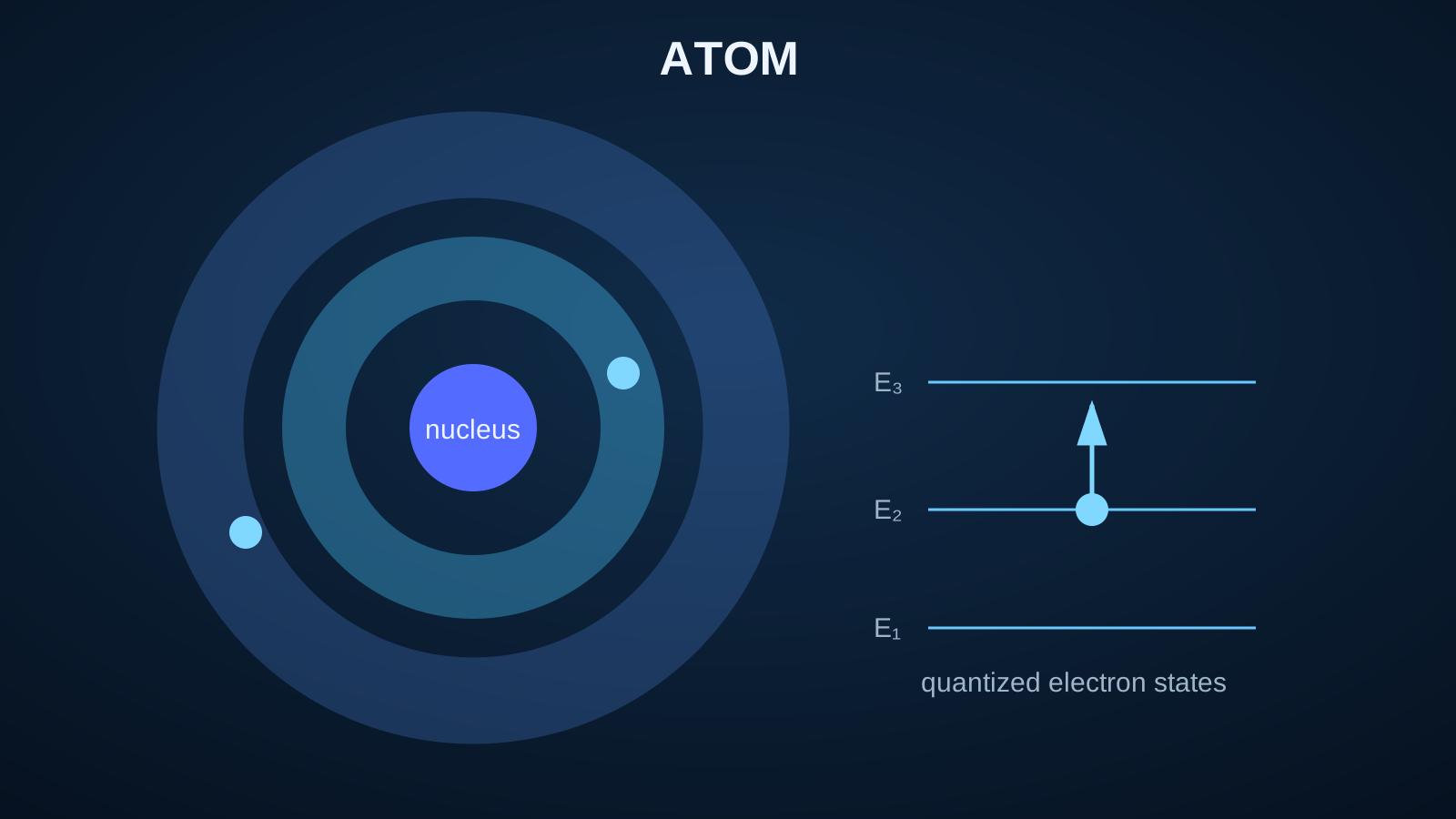
- The proton number determines the element.
- Electron configuration controls much of chemistry.
- Atomic spectra reflect transitions between quantum states.
- Neutral atoms have equal numbers of protons and electrons.
Understand in more depth
Atomic structure is governed by quantum mechanics and electromagnetism. Electrons occupy quantum states rather than classical planetary orbits. The allowed energy spectrum and wavefunctions determine atomic size, spectra and chemical behavior.
Minimum formulas
History of the idea
Early atomic models developed from spectroscopy and electron discovery. Bohr’s model introduced quantized energy levels, but full quantum mechanics in the 1920s replaced classical orbits with wavefunctions and operators.
What remains open
For isolated atoms the basic theory is extremely successful. Research continues in precision spectroscopy, many-electron correlation, highly charged ions and tests of fundamental constants and symmetries.