What to understand
The early Universe produced mainly the lightest nuclei. Stellar fusion builds many heavier nuclei, while neutron-capture and explosive processes extend nucleosynthesis further.
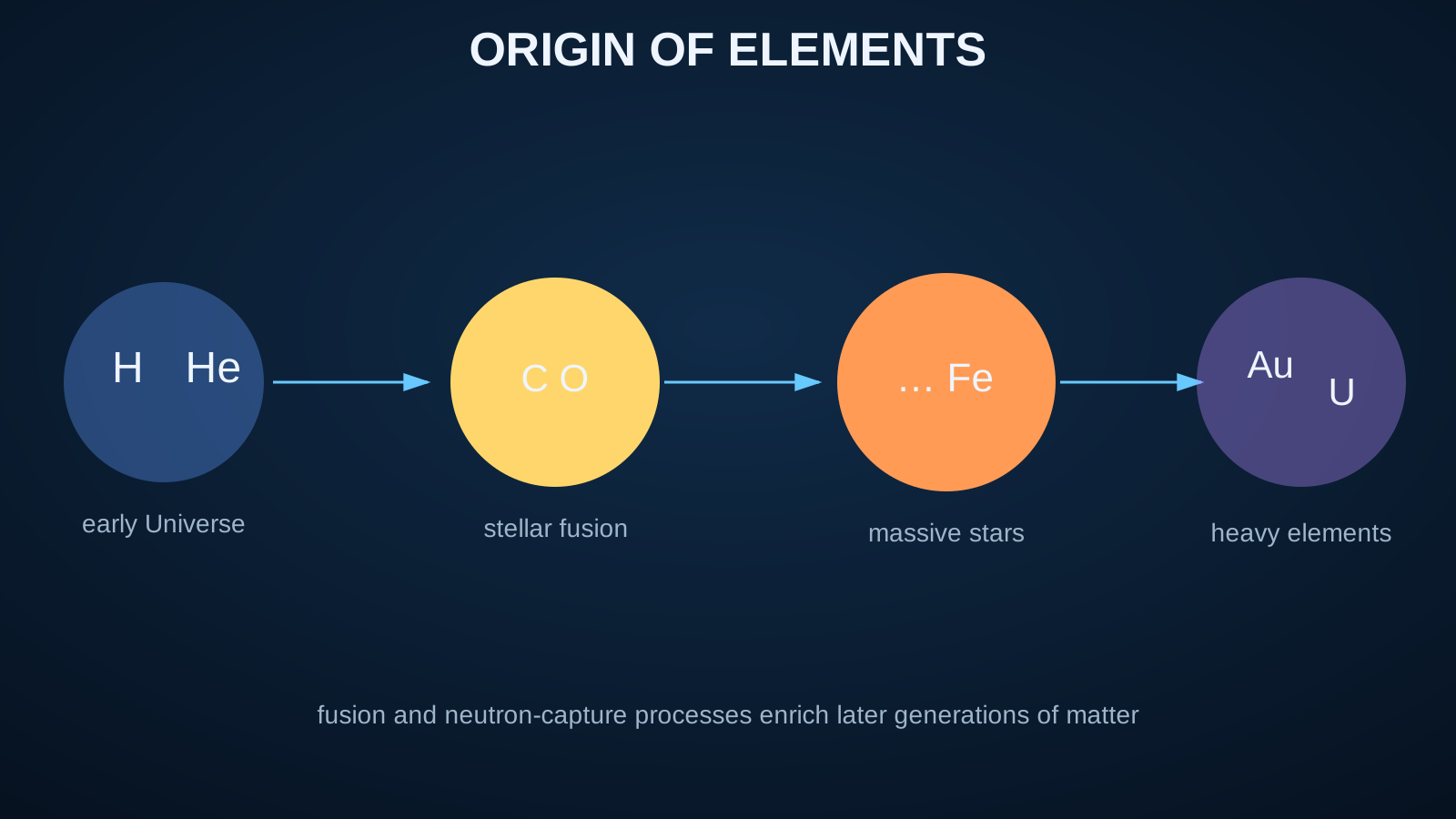
- Hydrogen and helium dominate ordinary cosmic matter by abundance.
- Stars synthesize elements through successive nuclear reactions.
- Iron-group nuclei mark an important energetic boundary for ordinary fusion chains.
- Very heavy nuclei require additional processes such as neutron capture.
Understand in more depth
The abundance pattern of the chemical elements is a historical record of nuclear processes. Big-bang nucleosynthesis produced mainly hydrogen, helium and traces of light nuclei. Stars then built heavier nuclei through fusion, while supernovae and neutron-rich environments contributed to still heavier species.
Minimum formulas
History of the idea
The connection between stellar interiors and nuclear reactions was established in the twentieth century. The classic theory of stellar nucleosynthesis showed how many elements can be assembled in stars and explosive astrophysical environments.
What remains open
The detailed astrophysical sites of some heavy-element production channels remain under active study. Nuclear reaction rates under stellar conditions also carry important uncertainties.